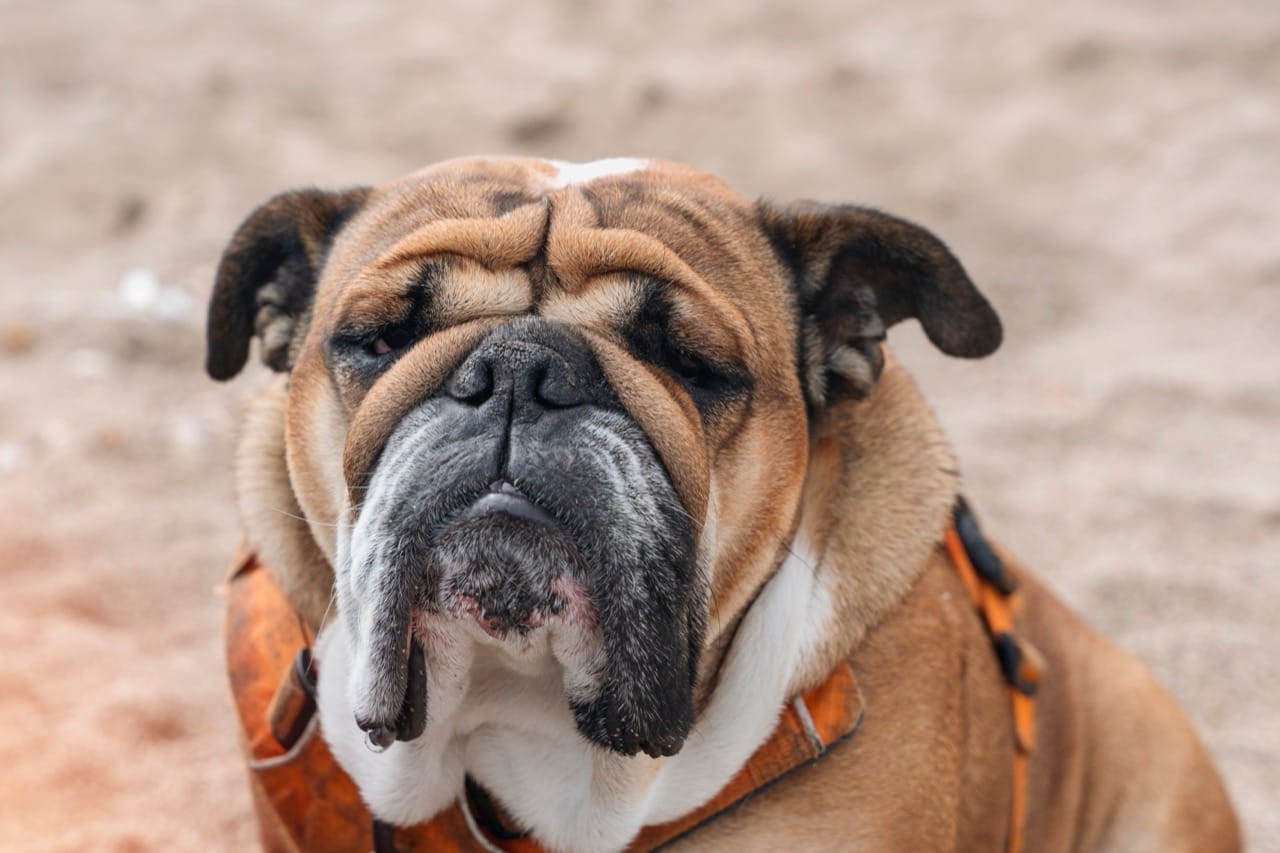
Face of an English Bulldog
Quiz Complete!
Spotting the English Bulldog by Looks: A Practical Guide
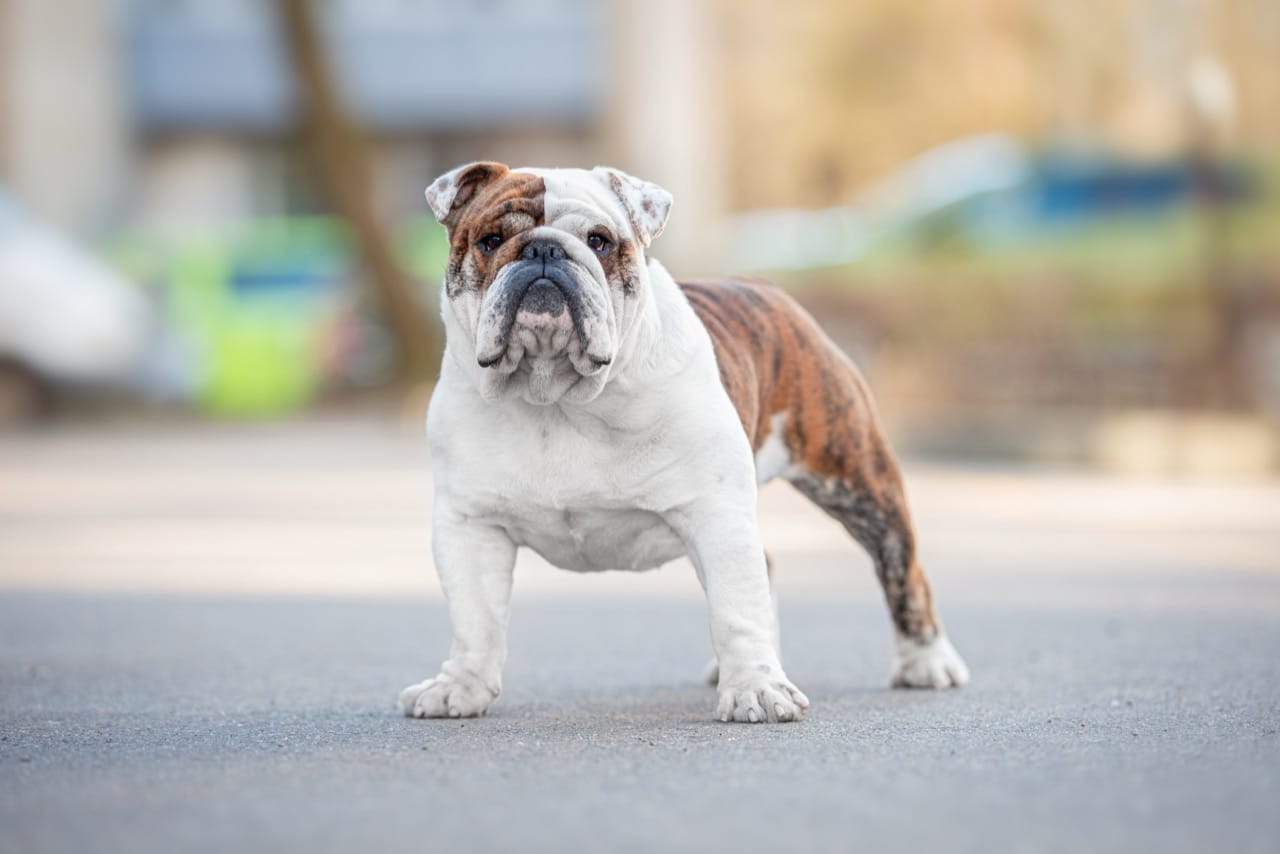
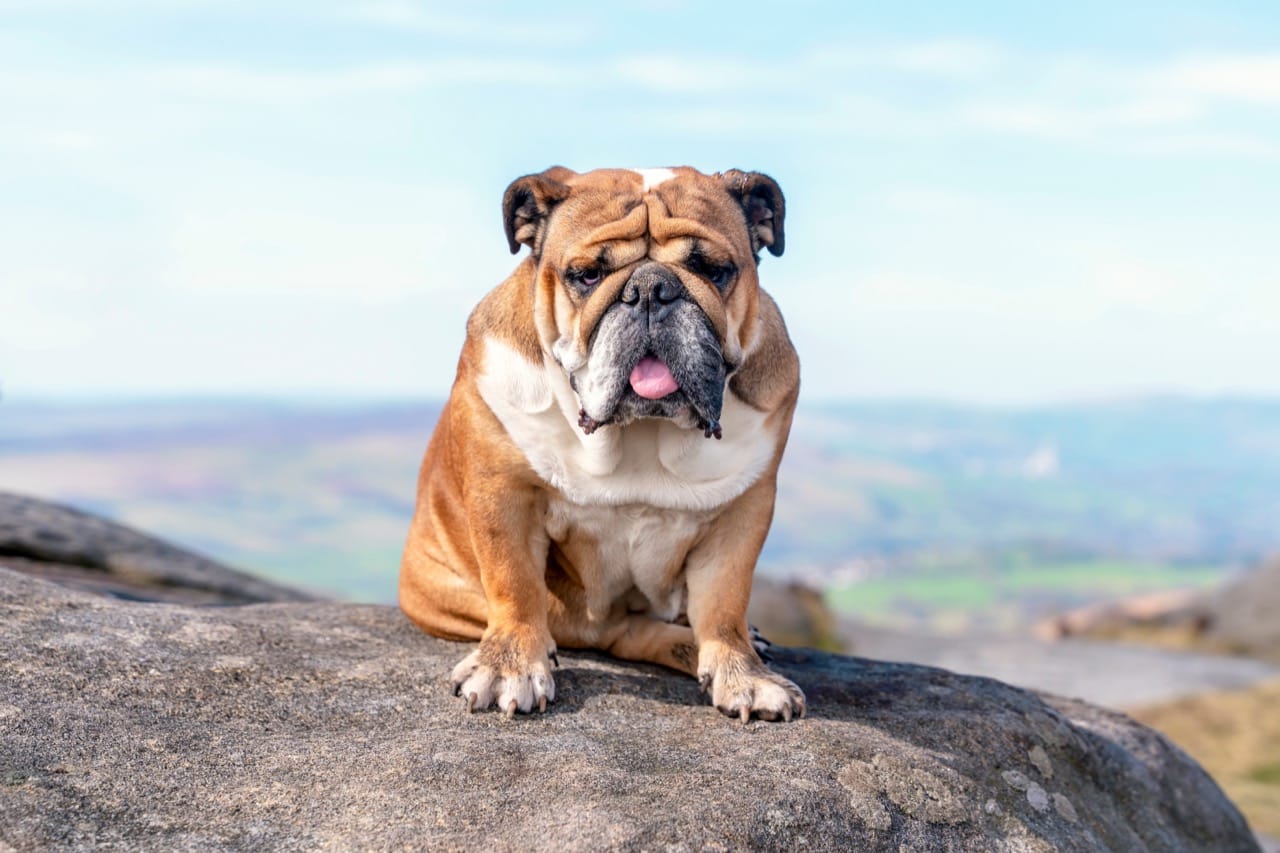
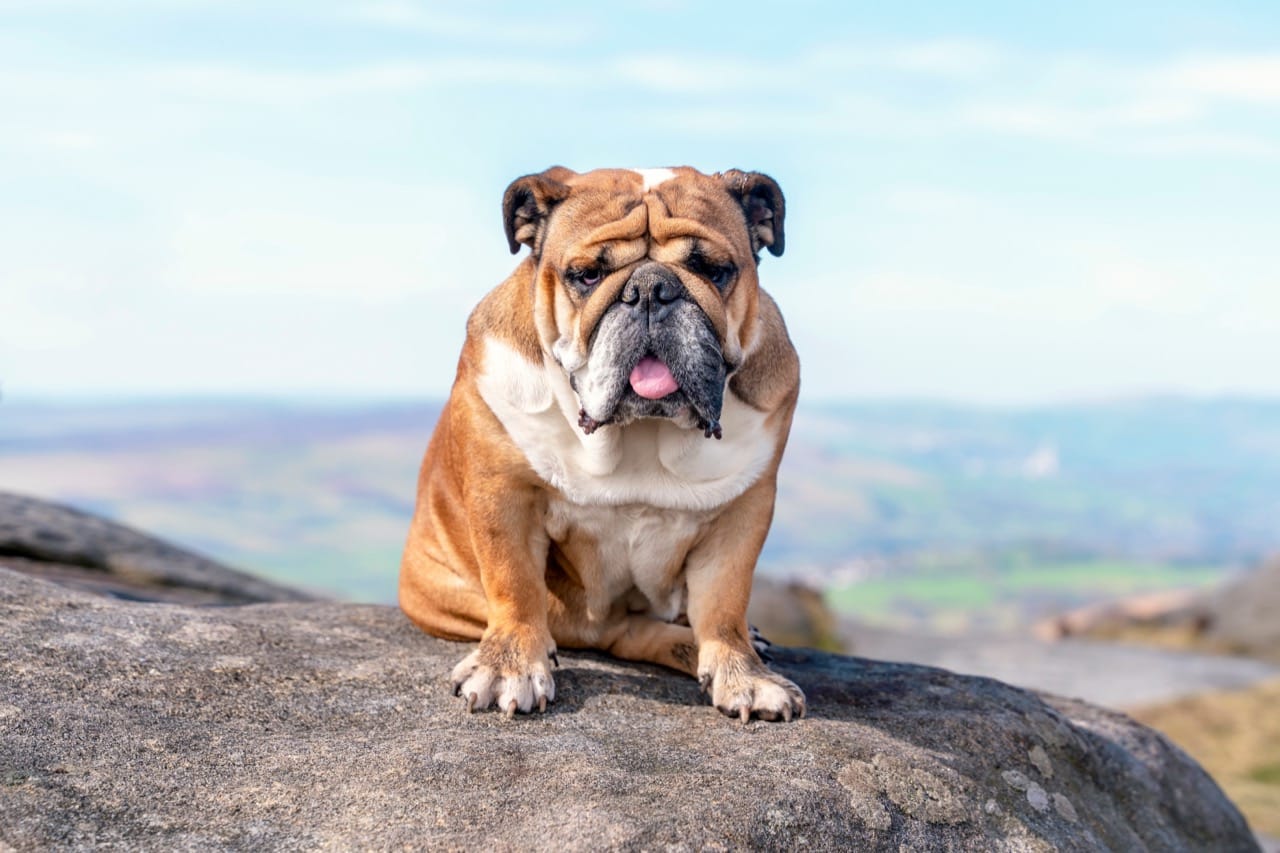
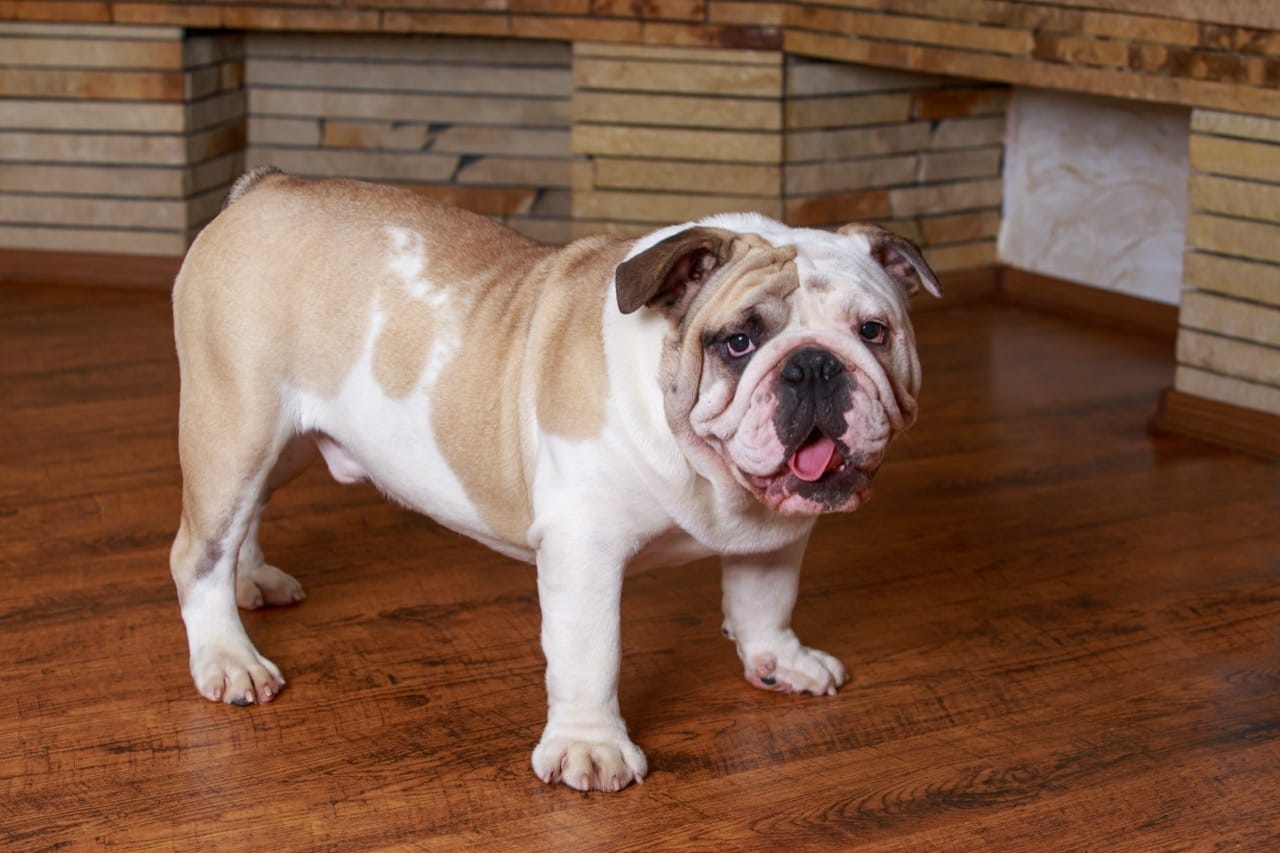
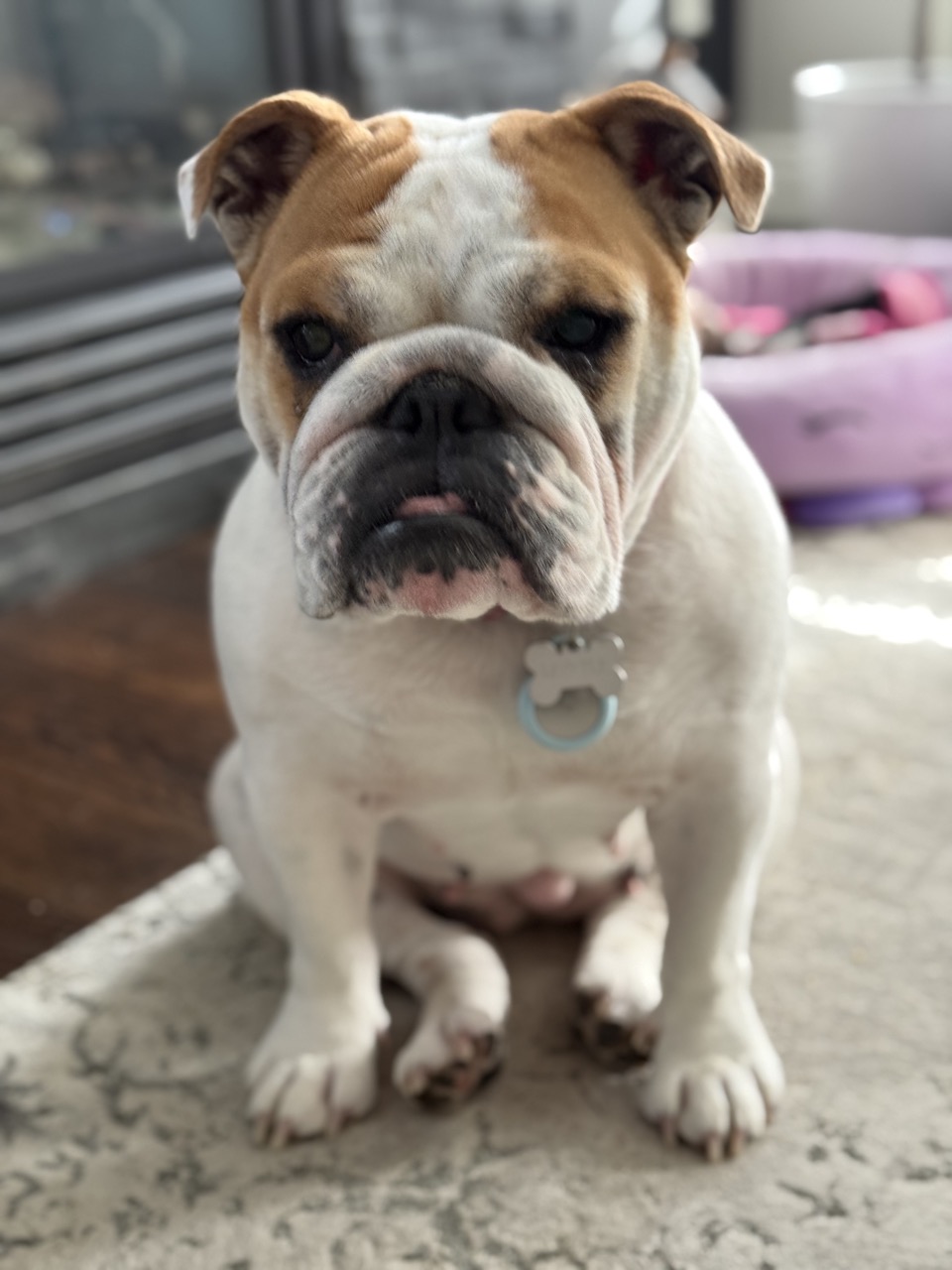
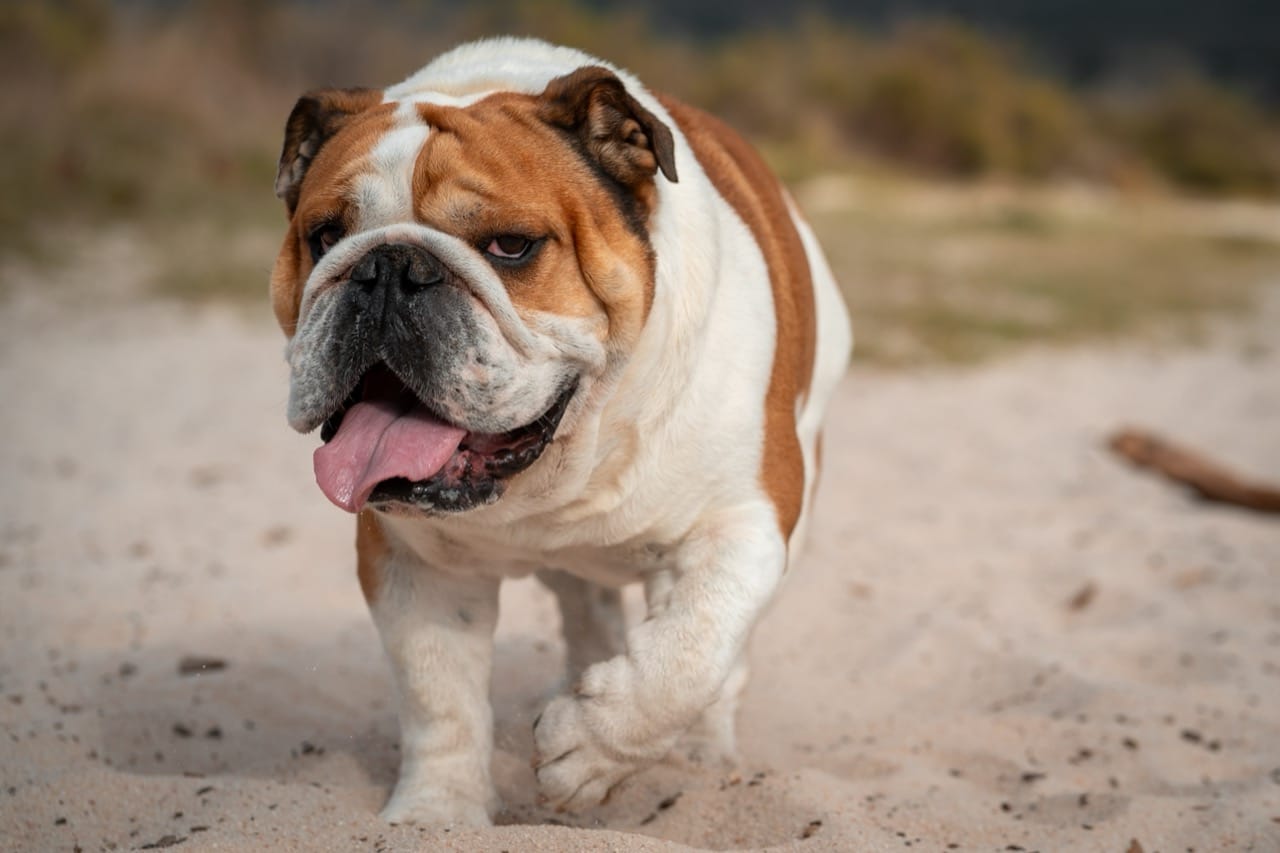
The English Bulldog is one of those breeds you can often recognize from across a park. The overall impression is square, low to the ground, and powerfully built, with a wide front that seems almost exaggerated compared to the dog’s height. Bulldogs are heavy boned for their size, with thick legs set well apart and a broad chest that gives them a sturdy, planted stance. Even when standing still, they look like they are braced for a slow, determined push forward rather than a sprint.
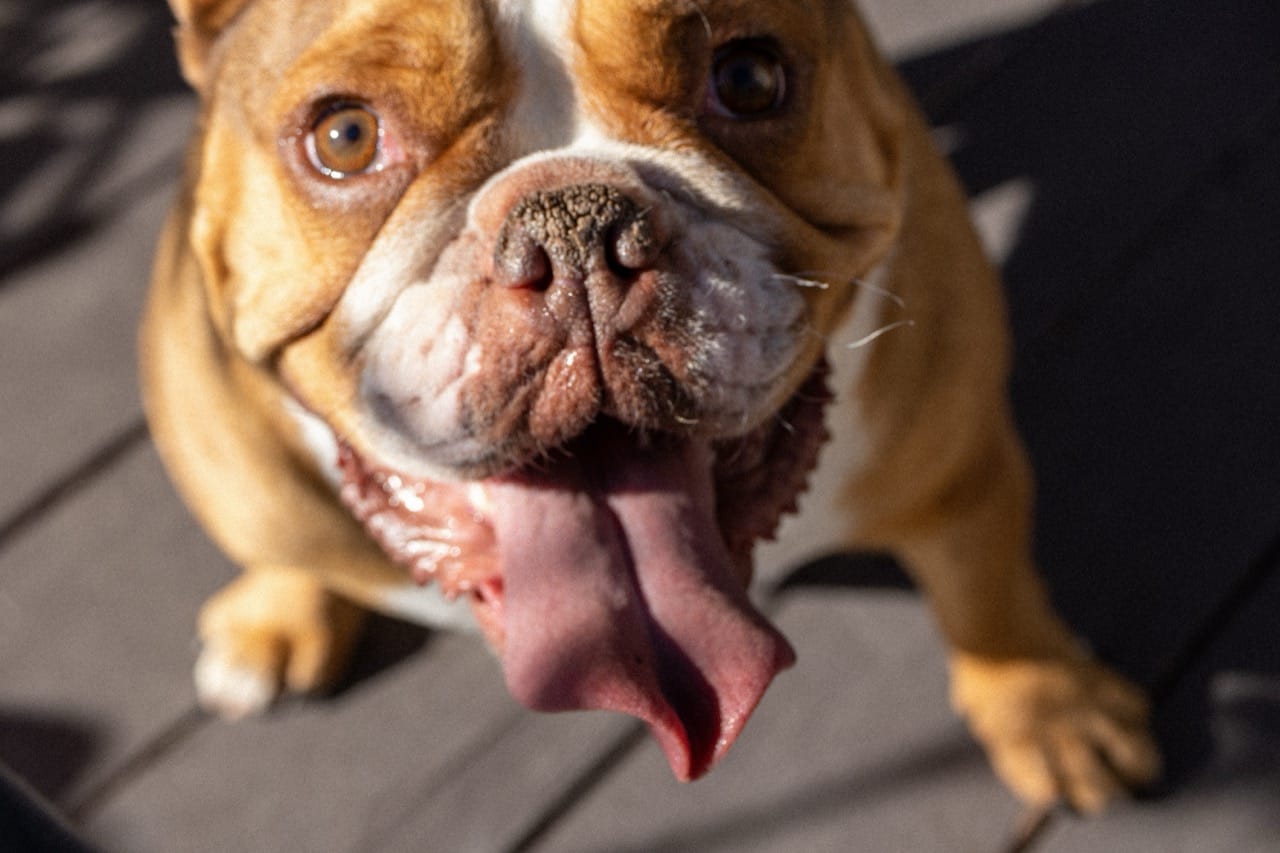
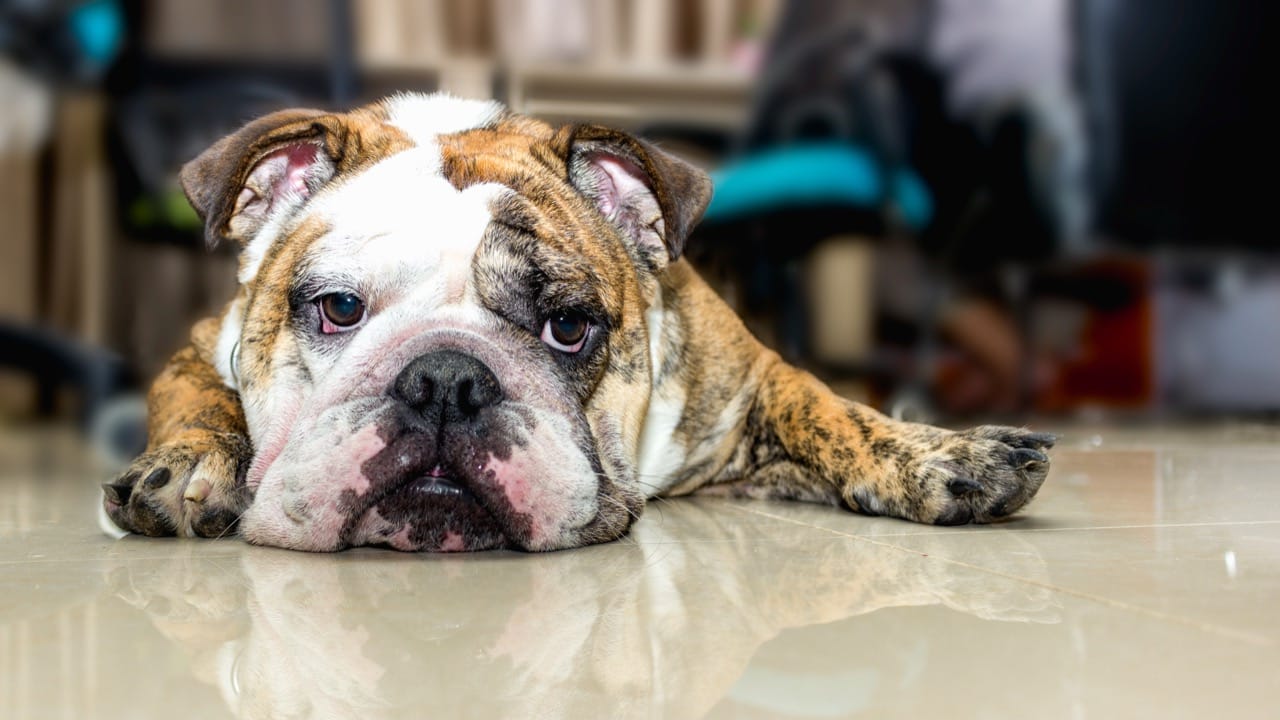
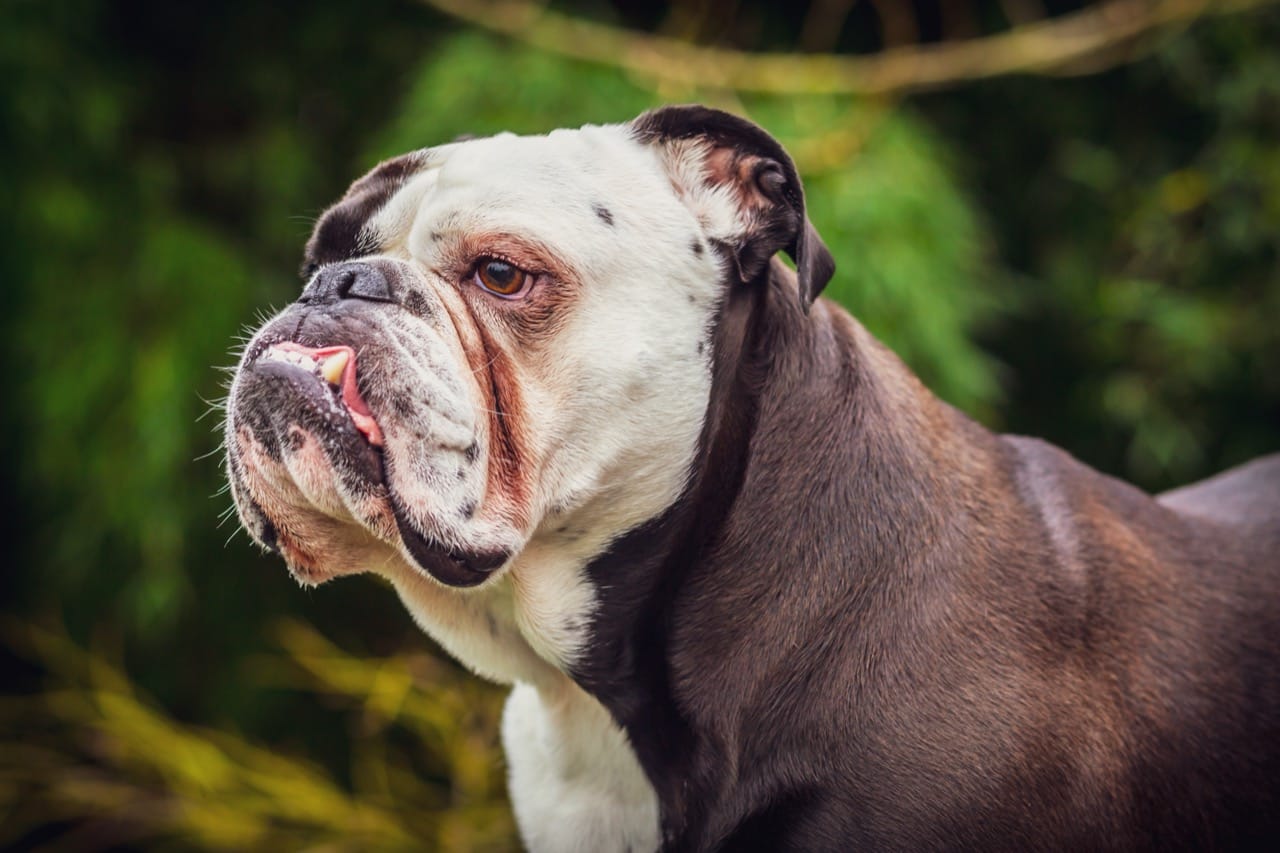
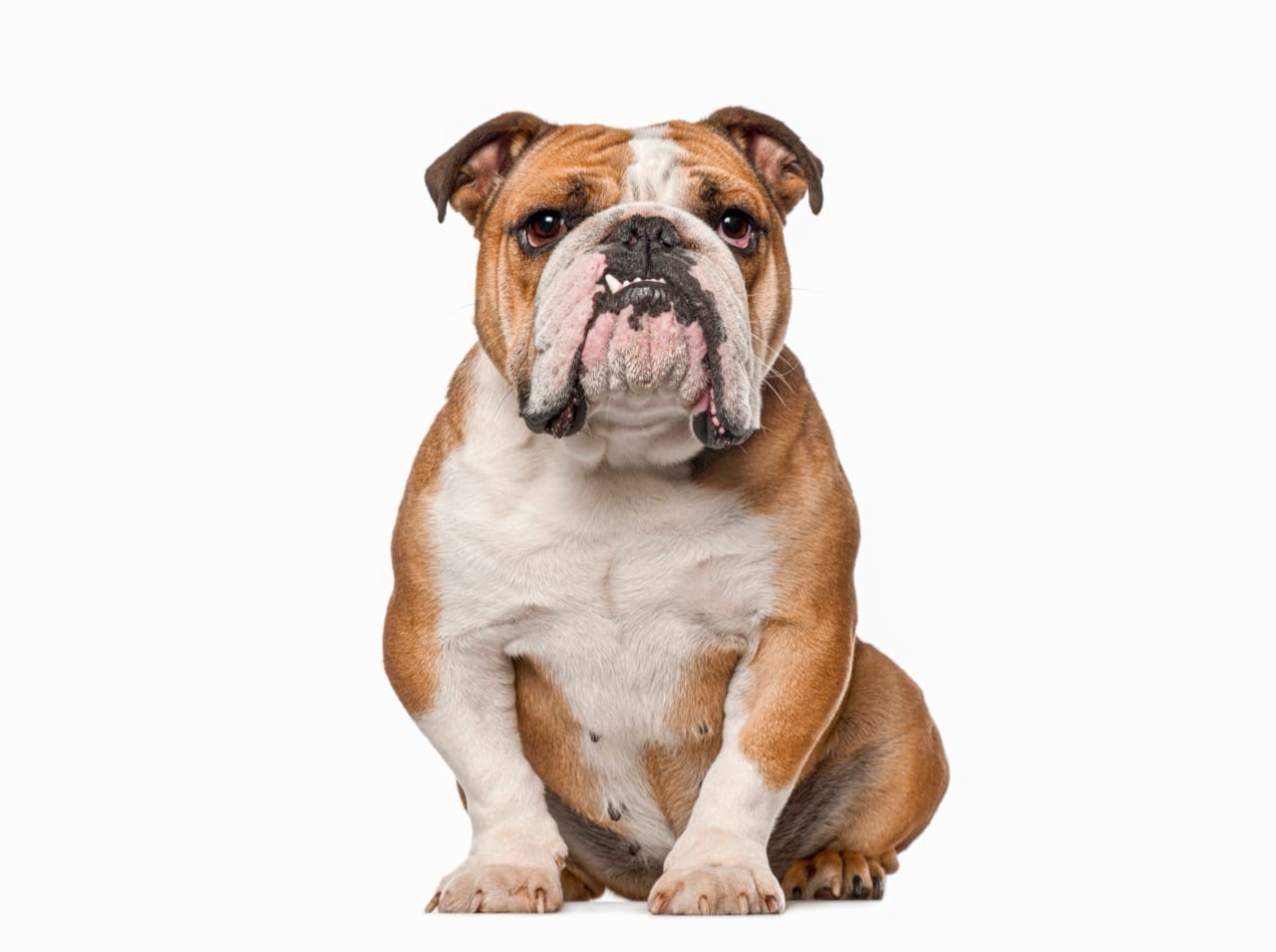
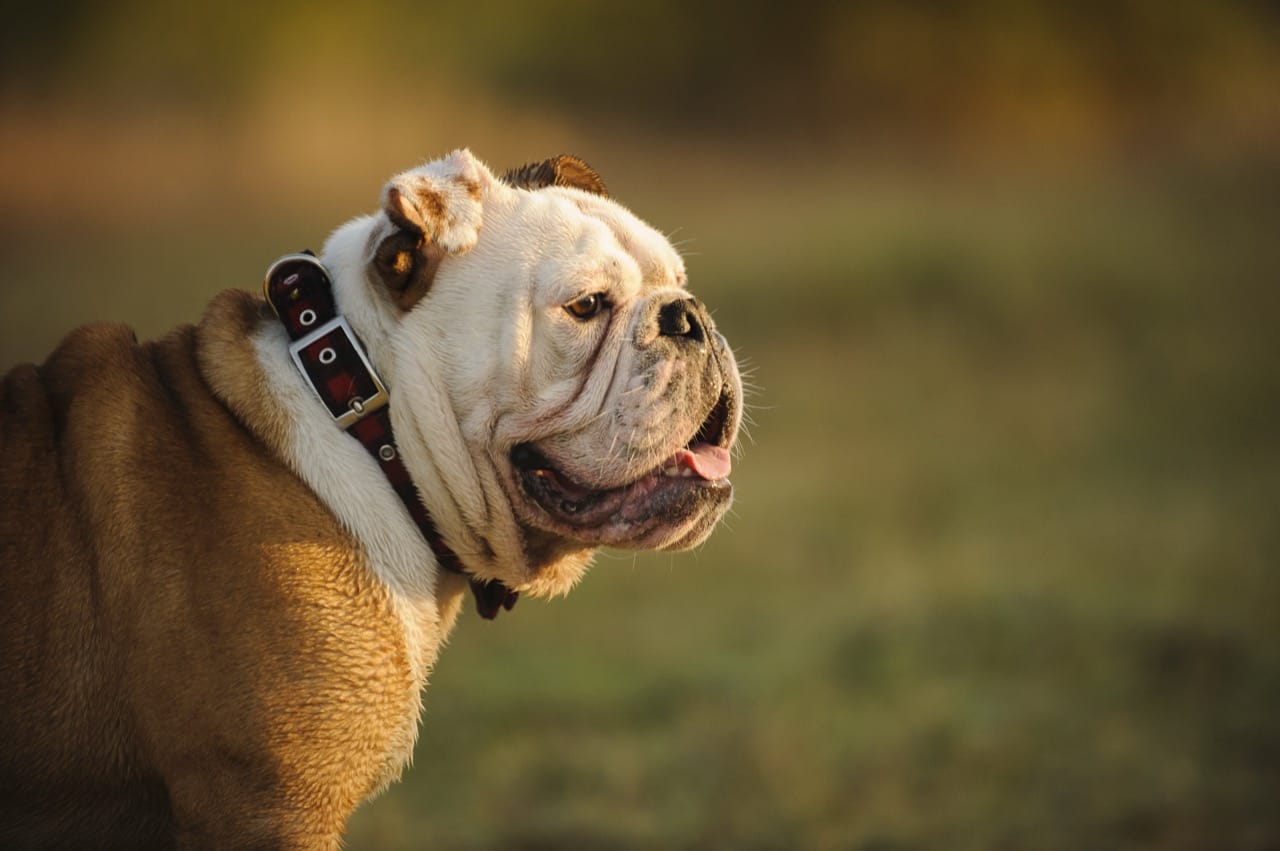
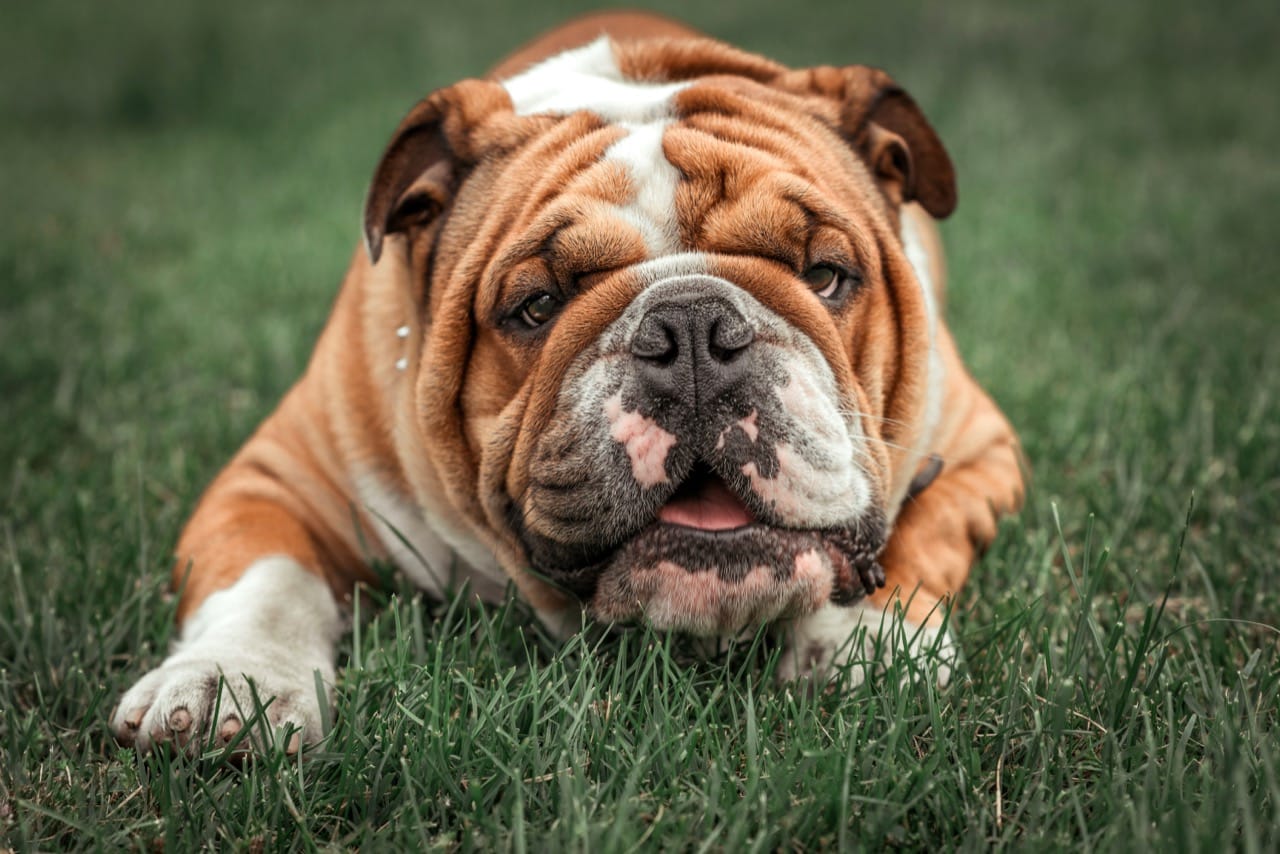
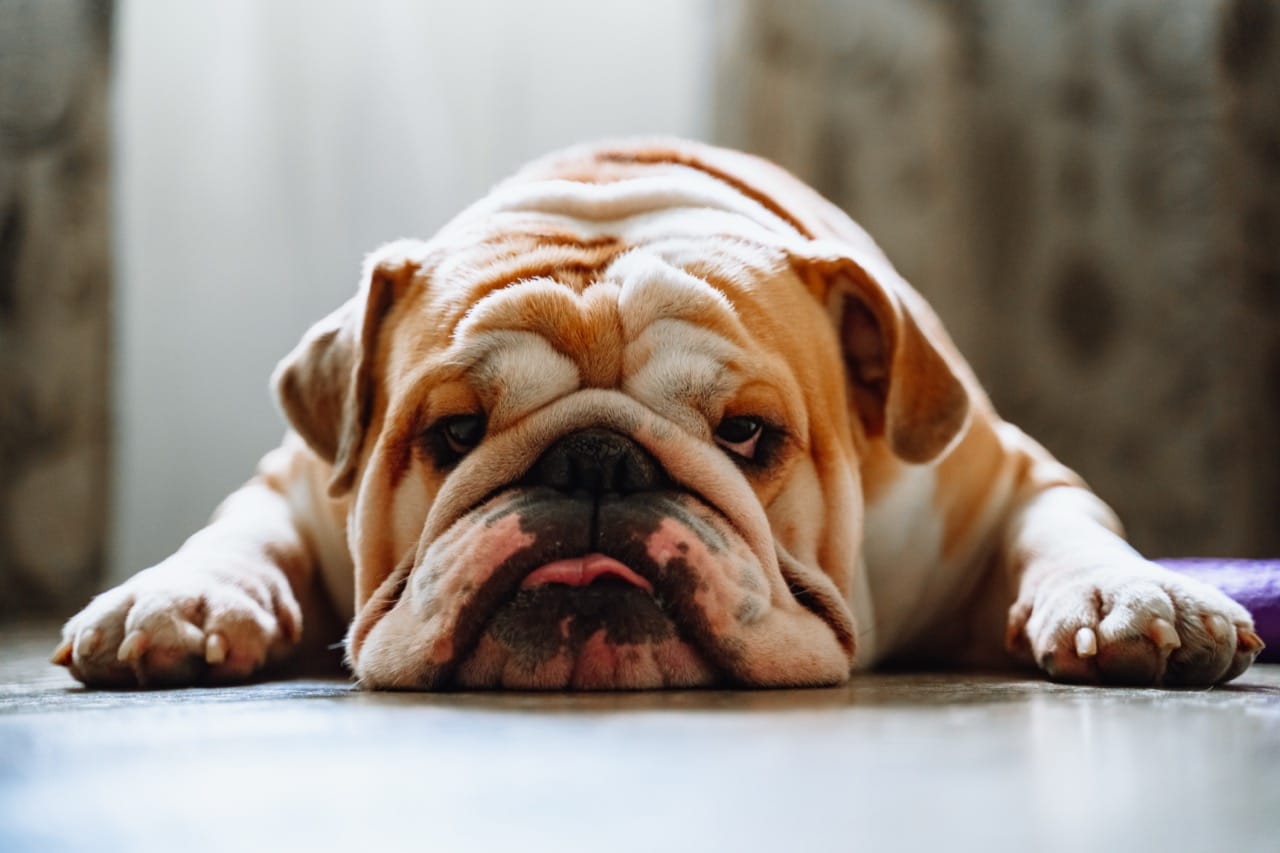
The head is the main giveaway. An English Bulldog’s skull is large and broad, and the face is short and deep from the eyes down to the jaw. The muzzle is notably short, but it is not just “short” in a generic way. It is often paired with a nose roll, the fold of skin above the nose that adds to the breed’s wrinkled expression, though the UK Kennel Club standard says this wrinkle must never obscure the eyes or nose. Those wrinkles are not random; they tend to be heaviest around the forehead and muzzle, creating a serious, slightly comical look that many people describe as grumpy or thoughtful.
Another hallmark is the bite. English Bulldogs typically have an undershot jaw, meaning the lower jaw extends beyond the upper. In a relaxed mouth you may not always see teeth, but the lower jawline often looks prominent. The cheeks can appear full, and the lips tend to hang slightly, which adds to the heavy, compact look of the face.
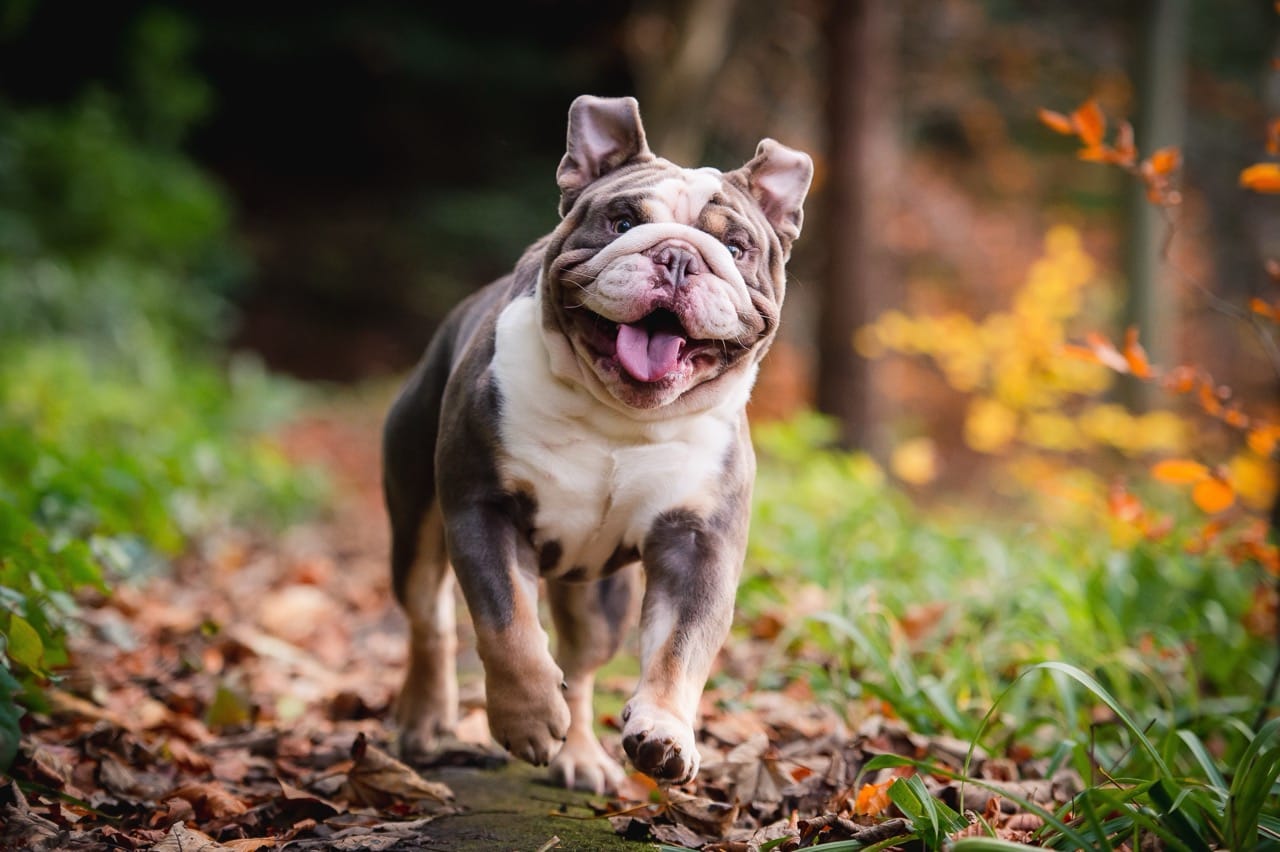
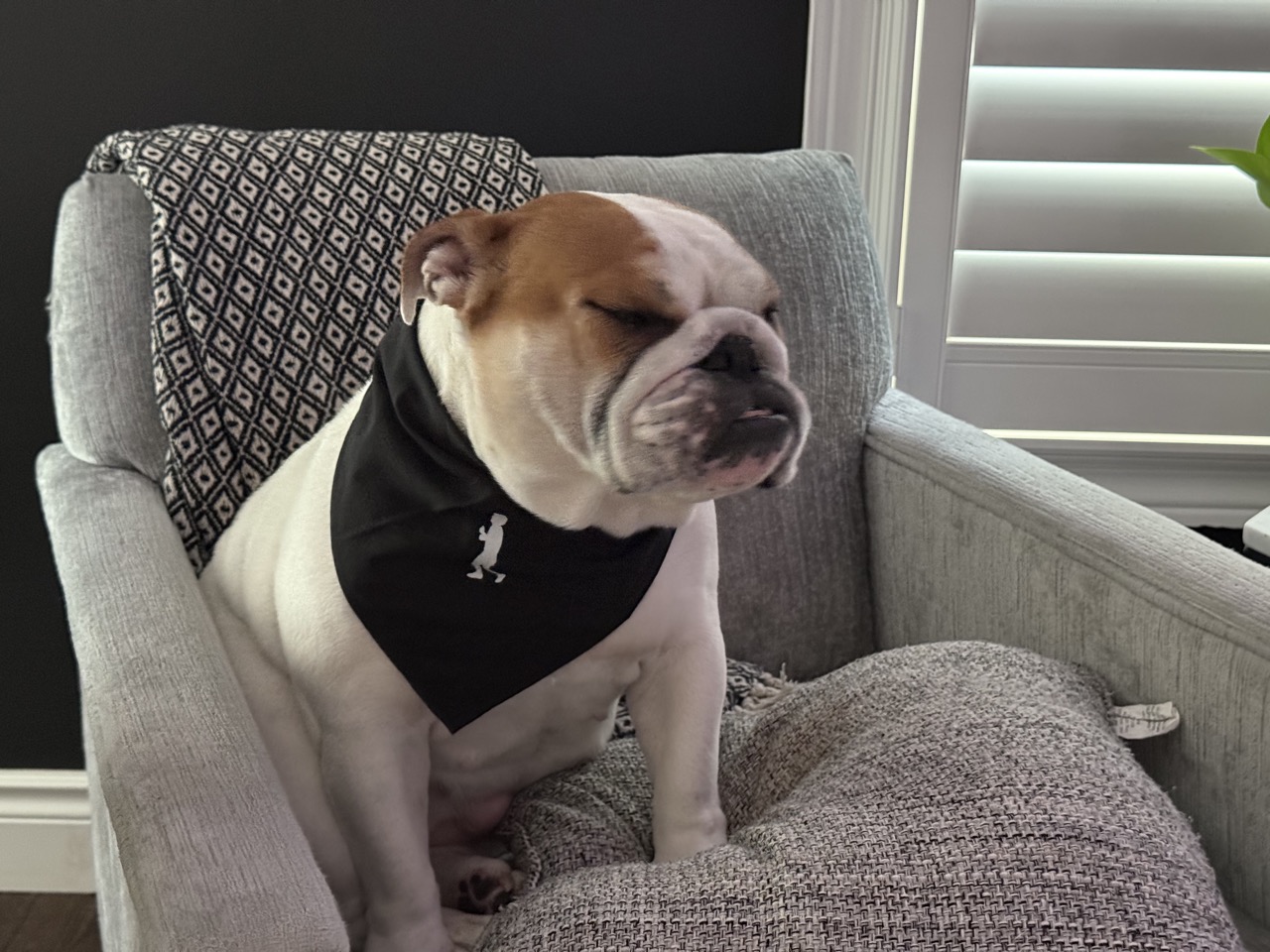
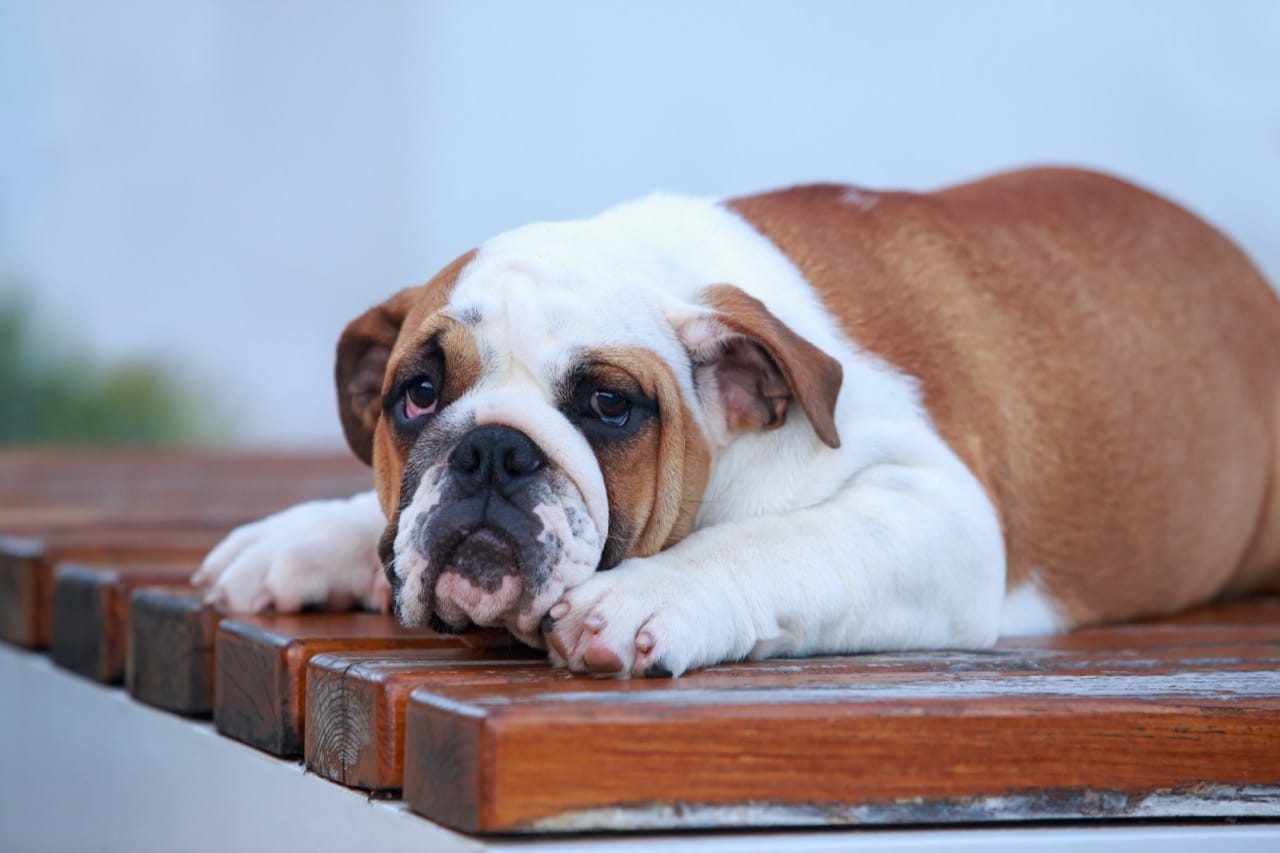
Ears help separate the English Bulldog from common lookalikes. The classic ear type is the rose ear: small, thin, and folded back so the inner edge is partly visible. This is different from the French Bulldog’s upright, bat-like ears that stand tall and forward. If you see a bulldog-shaped dog with large ears standing straight up, it is far more likely a French Bulldog than an English Bulldog.
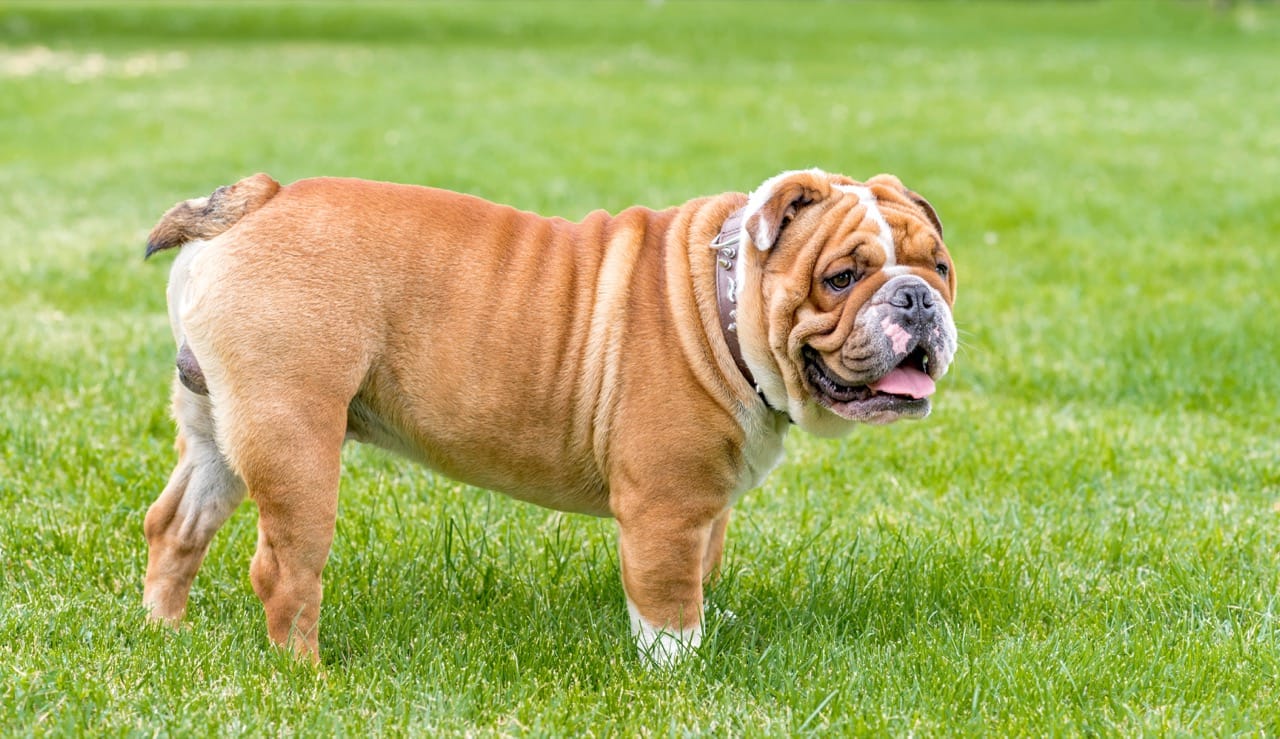
The body continues the breed’s signature silhouette. Bulldogs have a short back with a slight rise over the rear, often described as a roach back. Their shoulders are broad, and the front legs can look slightly bowed, contributing to a rolling gait. This movement is typical: a relaxed, side-to-side roll rather than a smooth, long stride.
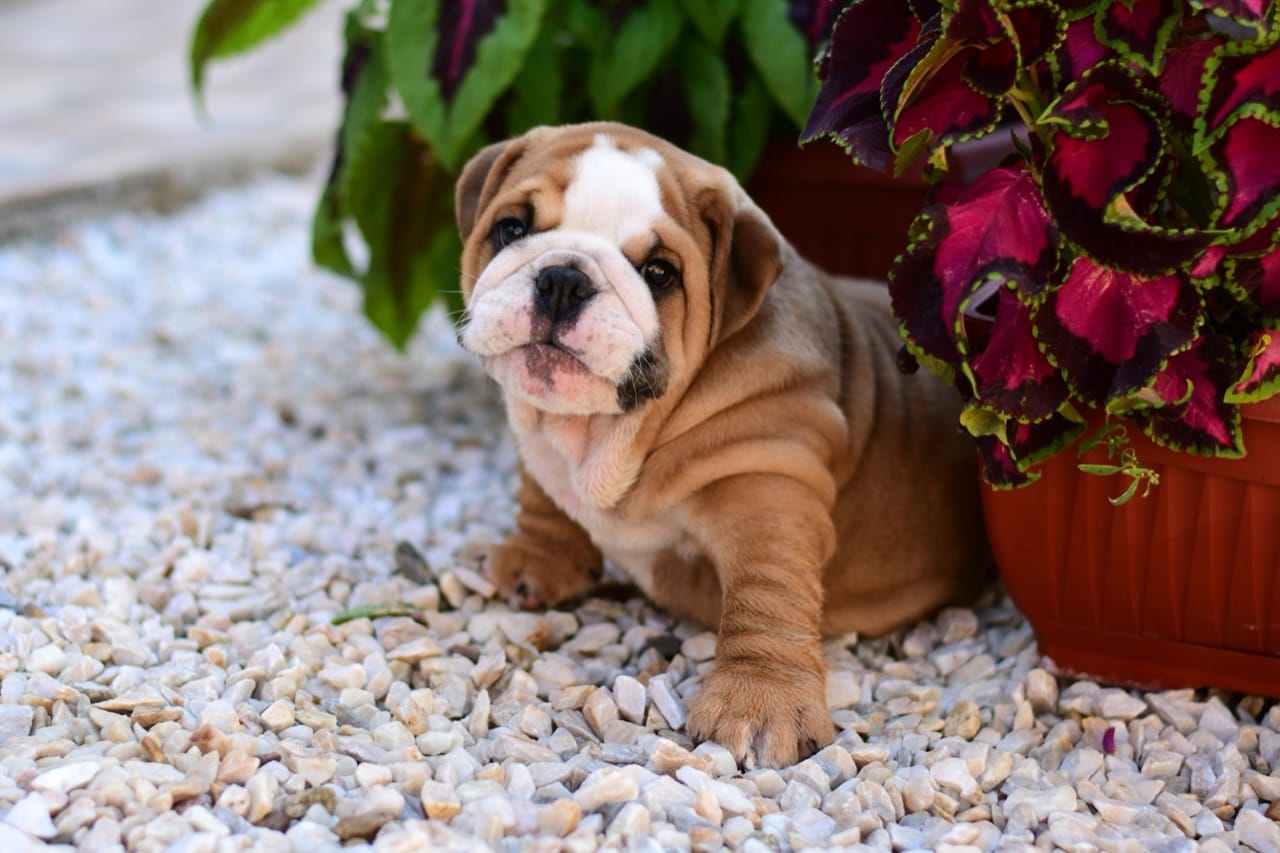
Coat and color are straightforward. The coat is short, smooth, and close to the body, not fluffy or feathered. Common colors include brindle, fawn, red, white, and combinations like pied patterns. Because the coat is so short, the skin folds and muscle shape show clearly, making the dog’s outline easy to read.
The tail is another useful clue. English Bulldogs usually have a very short tail that may be straight or screwed, but it is not long and sweeping. A longer tail or a more athletic, taller frame may point you toward the American Bulldog, which is generally larger, more leggy, and more agile-looking. American Bulldogs also tend to have a longer muzzle and less extreme facial wrinkling than the English Bulldog.
Putting it all together, the English Bulldog look is a specific combination: a wide, heavy front; a compact, low body; a massive head with a short muzzle and nose roll; rose ears; a short tail; and that distinctive undershot jaw. Once you train your eye to check those features in the same order every time, you will find that many “bulldog-type” dogs quickly sort themselves into clear categories, and the classic English Bulldog stands out as its own unmistakable original.