Raising a Rock-Steady Rottie












Quiz Complete!
Living Well With a Rottweiler: Home Skills That Build a Great Companion
Rottweilers have a reputation for being big, steady, and self-assured, and those qualities can make them wonderful household companions when their daily life is handled with consistency. They are not a “set it and forget it” breed, though. A Rottweiler tends to thrive when the rules are clear, the routine is predictable, and the humans in the home are calm, fair, and attentive. The home skills that matter most are the ones that prevent problems before they start: early socialization, reliable training habits, appropriate exercise, and practical care for a powerful dog with a dense double coat.
Socialization is often misunderstood as simply letting a puppy meet lots of people. For a Rottweiler, it is really about building good associations and teaching the dog how to stay composed. Controlled exposure to friendly adults and children, people wearing hats or carrying bags, bicycles, delivery drivers, and common household noises helps the dog learn that everyday life is normal. The key is quality over quantity. Short, positive experiences where the puppy can choose to approach and is rewarded for calm behavior are more valuable than overwhelming encounters. Because this breed can mature into a confident guardian, it is especially important to reward neutrality: the dog does not need to greet everyone, but should be able to ignore and relax.
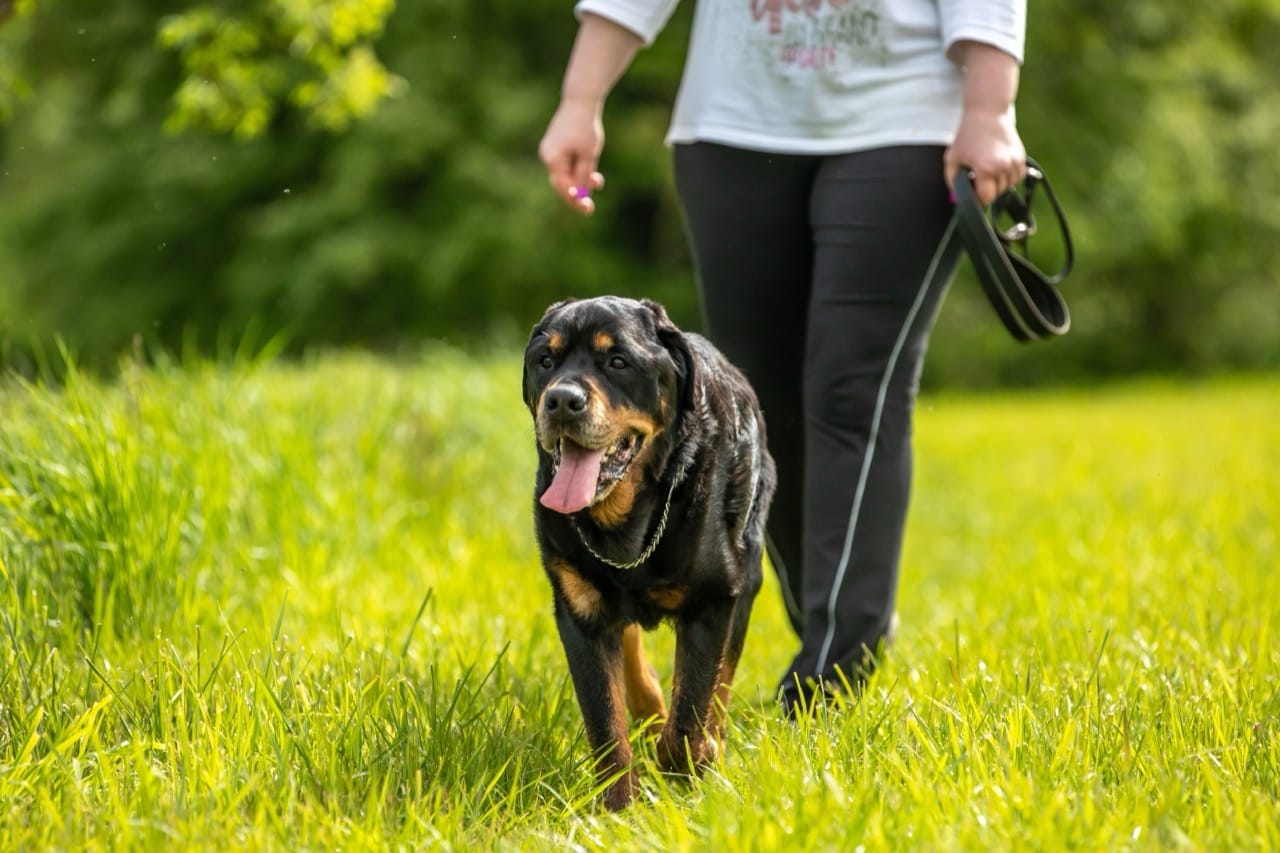
Training works best when it becomes a daily habit rather than an occasional project. Rottweilers are intelligent and often eager to work with their person, but their strength means that “mostly listens” is not good enough. Simple cues like sit, down, stay, come, leave it, and place are not party tricks; they are safety tools. A reliable recall can prevent a dash into a street. A strong leave it can stop the dog from grabbing a dropped pill or chasing a squirrel. Teaching loose-leash walking early is one of the smartest investments an owner can make. Pulling is not just annoying with a large dog; it can become a serious risk if the dog lunges toward another animal or person. Rewarding the dog for walking near you, changing direction when the leash tightens, and practicing in low-distraction areas builds skills that hold up in real life.
Supervision and management are part of good temperament. Even a friendly Rottweiler may be clumsy around small children simply due to size. Baby gates, crates, and closed doors are not punishments; they are tools that prevent rehearsing bad habits like counter surfing, chewing furniture, or rushing the front door. Door manners are especially important in a breed that looks imposing. Teaching the dog to sit or go to a mat when the doorbell rings reduces chaos and helps visitors feel comfortable.
Exercise is not only about burning energy but also about meeting mental needs. Many Rottweilers enjoy brisk walks, training games, scent work, puzzle feeders, and structured play more than endless running. Mental work can tire a dog efficiently and reduces boredom, which is a common trigger for destructive behavior. Short training sessions throughout the day, a food puzzle at mealtime, or a “find it” game with treats hidden around the home can make a noticeable difference in behavior.
Grooming a Rottweiler is usually straightforward, but it should not be ignored. The breed has a double coat that sheds, sometimes heavily in seasonal bursts. Regular brushing helps control loose hair and supports healthy skin. Basic care also includes nail trims, ear checks, and dental hygiene. Getting a puppy comfortable with being handled pays off later when the dog is large and strong. A calm routine of touching paws, looking in ears, and gently brushing for a minute or two can turn grooming into a normal, stress-free event.
Finally, good home life with a Rottweiler is built on structure and prevention. Consistent rules, positive reinforcement, and clear boundaries create a dog that understands what to do rather than one that is constantly corrected for mistakes. When owners prioritize early socialization, practice practical training, provide both physical and mental exercise, and maintain routine care, the breed’s famous confidence becomes a strength. The result is a steady companion that can relax at home, behave politely in public, and share daily life safely with the people who depend on them.