Merle, Copper and the Aussie Wardrobe













Quiz Complete!
Australian Shepherd Looks Myth Check: What You Can Really See

Australian Shepherds have a way of looking like they are in on a secret. The bright, watchful expression, the agile outline, and the eye catching coat can make people feel they know the breed at a glance. Yet a lot of popular ideas about how an Aussie must look are more myth than fact. If you want to identify an Australian Shepherd by sight, it helps to look past internet stereotypes.
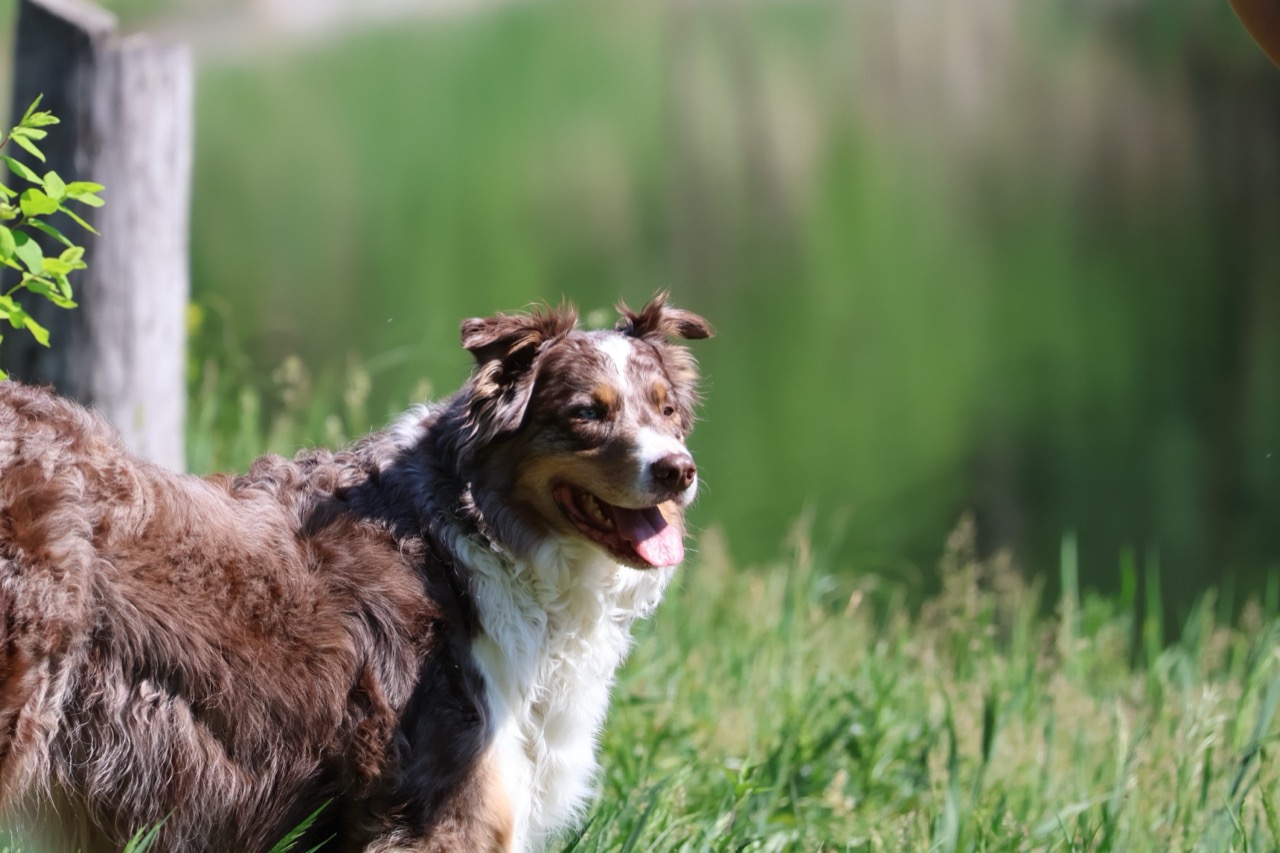
One of the biggest misconceptions is that every Aussie is merle. Merle is common and dramatic, with mottled patches that can look marbled or splashed across the coat, but it is only one of the accepted patterns. The AKC standard lists blue merle, black, red merle, and red, all with or without white markings and tan points, so plenty of Aussies are simply black or red. The red shades are often called liver by some people, and they can range from deep chocolate to a lighter reddish brown. White markings are normal, often showing up as a blaze on the face, a collar around the neck, chest white, and socks. Tan points can appear above the eyes, on cheeks, legs, and under the tail. Remember that a dog can be a perfectly typical Aussie without any merle at all.
Another myth is that Australian Shepherds always have a naturally bobbed tail. Some do carry a natural bobtail gene, but many are born with full length tails. In places where tail docking has been common, people may assume a short tail is a built in breed feature. If you are looking at an Aussie with a short tail, you cannot reliably tell by sight alone whether it is natural or docked. Tail length is not the best single clue.
Coat texture is a better clue. An Aussie has a medium length double coat designed for weather, with a straight to wavy outer coat and a softer undercoat that can vary by season. The coat should not be tight and sleek like a short coated breed, and it should not be as long or profuse as a rough Collie. There is usually noticeable feathering on the backs of the legs, along the belly, and sometimes a mane like ruff around the neck, especially in males.
The head and ears also help separate fact from mix up. Australian Shepherd ears are set high on the head and are typically triangular with a folded over tip, often described as a break or semi erect ear. Fully prick ears can happen but are not the classic look, and heavy drop ears point you toward other breeds. The expression is alert and intelligent, with eyes that can be brown, blue, amber, or even two different colors. Blue eyes are not exclusive to merles, though they are more common there.
People often confuse Aussies with Border Collies, and the mix up makes sense because both are herding dogs with athletic builds and similar color themes. The difference is mostly in the overall outline. Aussies are generally more robust and slightly more compact, with a bit more bone. Border Collies tend to look leaner and more streamlined, and their ears can be erect or semi erect. Movement can also give it away: Aussies often look powerful and springy, built for quick turns and bursts of speed.
Another common lookalike is the Miniature American Shepherd, which resembles a smaller Aussie because it was developed from small Australian Shepherds. Size becomes the main visual clue, but it is not always obvious without comparison. Meanwhile, breeds like Shetland Sheepdogs or rough coated Collies have longer, more abundant coats and a distinct narrow, wedge shaped head. Catahoula Leopard Dogs may share a merle pattern, but they have a shorter coat and a different outline.
If you want to myth proof your identification, focus on the combination of traits rather than one flashy feature. Look for a medium length weather ready coat with moderate feathering, a balanced athletic body that is sturdy without being heavy, semi erect ears with a folded tip, and a pattern and marking set that can include merle but does not depend on it. The real Aussie look is not a single costume. It is a practical, handsome design shaped by work, and you can spot it by paying attention to the details that stay consistent even when the colors vary.